There is something uniquely energising about watching people encounter foresight for the first time and seeing new tools unlock fresh ways of thinking, witnessing initial sparks of curiosity, and hearing questions about how bold ideas might become concrete action. Even more inspiring is returning two years later to discover how those early experiments have matured into real organisational practices.
This is precisely what has happened since the International Civic Forum (ICF) 2023 in Brussels. The methods tested during that gathering later formed the basis of the Toolkit for Tomorrow: Anticipating Civil Society Futures, released in June 2024. While many participants were new to foresight, their diverse starting points became a strength, shaping how each organisation adapted the methodology to its own context.
Now, the International Civil Society Centre is excited to share five new case studies demonstrating how organisations around the world have used the toolkit to anchor long-term thinking, strengthen collaboration, and prepare for an uncertain future. These stories show the toolkit not as a static resource, but as a catalyst for ongoing experimentation.
Five organisations, five different ways into the future
The case studies capture the journeys of an international federation, a national platform, a regional hub, and two national coalitions reflecting the rich diversity of civil society itself. Each organisation approached foresight differently, yet all discovered its value to pause, reassess, and plan with greater intention.
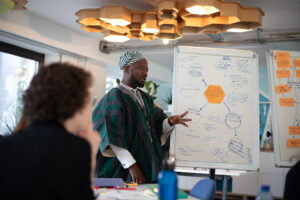
WACSI: Deepening strategic conversations in West Africa
The West Africa Civil Society Institute chose not to create a standalone foresight programme. Instead, it embedded foresight approaches into its existing capacity-building workshops. This subtle yet strategic move enriched conversations about funding, sustainability, and governance, helping partners look beyond immediate pressures and consider emerging challenges and opportunities.
RACI: A participatory, future-oriented strategy for Latin America and the Caribbean 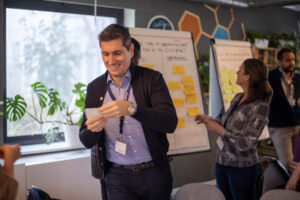
In Argentina, RACI used foresight as the backbone of its 2025–2030 strategic planning process. Through a year-long, participatory approach, it brought diverse stakeholders together to explore uncertainty and consider what civil society in the region may face in the years ahead. The result is a strategy grounded not only in present realities but also in future possibilities.
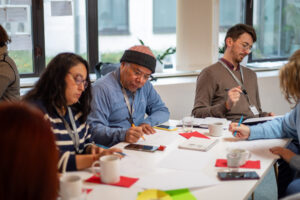 UnidOSC: Creating shared language in a diverse coalition
For the Mexico-based coalition UnidOSC, foresight became a tool to coordinate across a wide range of organisations, academics, and activists working to protect civic space. By developing a shared language for discussing change, the coalition was able to strengthen collaboration amid a rapidly shifting operating environment.
Uganda National NGO Forum: Preparing collectively for the 2026 elections 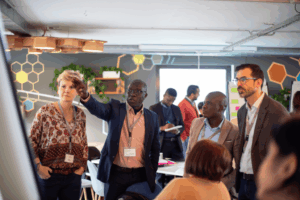
Facing significant political pressures ahead of Uganda’s 2026 elections, the Uganda National NGO Forum used foresight to take a step back from day-to-day urgencies. The process enabled civil society actors to reflect together, anticipate risks, and begin aligning strategies for a more coordinated response. It also offered rare space for long-term thinking in a challenging context.
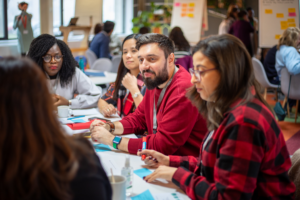 World YMCA: Making foresight a constant organisational habit
The World YMCA approached foresight not as a one-off exercise but as something to weave into everyday organisational life. Through retreats, partnerships, and strategic dialogues, it has cultivated an ongoing culture of experimentation and shared responsibility for long-term direction across a movement of more than 120 national organisations.
A growing culture of future-readiness
Across these stories, one message stands out: foresight is not a one-size-fits-all approach. Its strength lies in how organisations make it their own, while sometimes cautiously, sometimes boldly, they must do it according to their context and ambitions. Yet a shared thread runs through the case studies: the desire to pause, reframe challenges, and prepare more deliberately for the future.
Two years after the initial spark at the ICF, foresight has taken root in varied and meaningful ways. The creativity and ownership shown by each organisation underscore an essential truth: tools matter, but what truly drives change is how people use them.
Explore the case studies: Toolkit for tomorrow in action today
We hope these examples offer inspiration and invite you to share them within your networks as civil society continues building a more future-ready sector.
Related resources
-
Toolkit for tomorrow in action today
Real-world examples of how organisations have used the Toolkit for tomorrow: Anticipating civil society futures to explore and shape their futures.
-
Toolkit for tomorrow: Anticipating civil society futures
The toolkit supports CSOs' efforts to strengthen the civil society operating space while gaining a deeper understanding of futures thinking and foresight methods and how they can be applied within the context of civil society. Available in English, Spanish and French.
-
Mapping the landscape: Anticipating futures for civil society operating space
This report contributes to the Centre’s multi-year initiative Anticipating Futures for Civil Society Operating Space to strengthen the anticipatory capacities and future readiness of civil society professionals who are working to defend civic and civil society operating space.