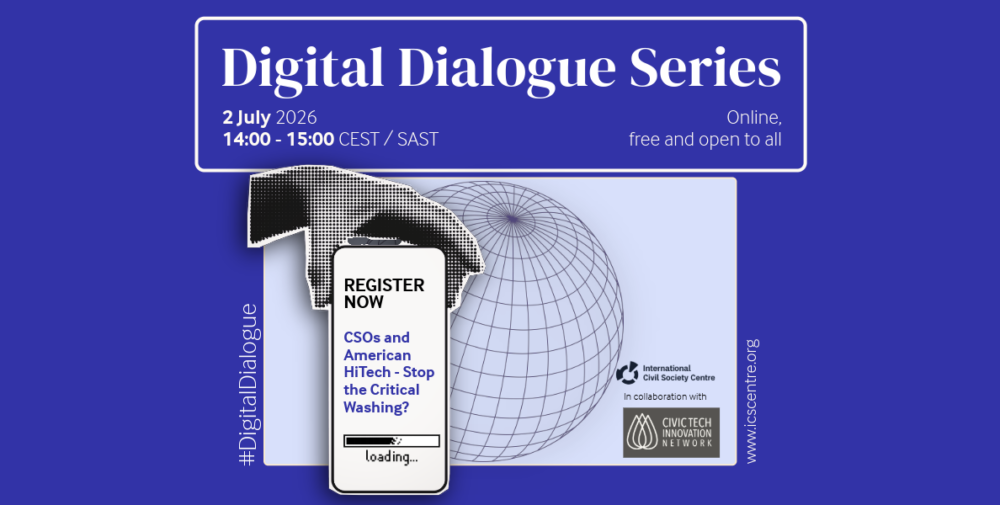
CSOs and American HiTech – Stop the Critical Washing?
Most would agree that CSOs have a mandate, ample goodwill and competencies serving the common good. Likewise, it can be said that CSOs often lack capacity and resources. In this context, many CSOs have built close relationships with powerful private tech companies. These partnerships often come with uneven levels of power and resources. This raises questions about how they work together in practice. Companies often present their support as part of their corporate social responsibility (CSR).
At the same time, this kind of relationship is being discussed more critically. Some argue that it can lead to what is called “ethics” or “critical” washing. Others point out that these partnerships can still bring real benefits. Together, these views highlight the complexity of these relationships. They also raise questions about how they can become more balanced and meaningful.
The question arises whether CSO, closely collaborating with US tech companies, are not, in fact, willing or unwillingly, being used for ethics and critical washing?
The Digital Dialogue event series, jointly produced by the International Civil Society Centre, Berlin, and the Civic Tech Innovation Network, Johannesburg.
The Panelists:
- Kavisha Pillay is Executive Director and founding director of the Campaign on Digital Ethics (CODE), a South African civil society organisation dedicated to advancing digital rights, ethical technology governance and democratic accountability in the digital age.
- Jochim Selzer is part of Chaos Computer Club, which is the largest computer hacking association in Europe and is a long-standing advocate for digital independence and decentralisation, bringing perspectives on digital sovereignty, democratic governance and the implications of concentrated technological power.
- Francesca Bosco is a senior expert and strategic advisor with experience working at the intersection of AI, digital resilience and emerging technologies. She has held senior leadership roles at the CyberPeace Institute (now Protect.ngo), the World Economic Forum and the United Nations, and works across sectors to advance ethical, secure and rights-based digital transformation.