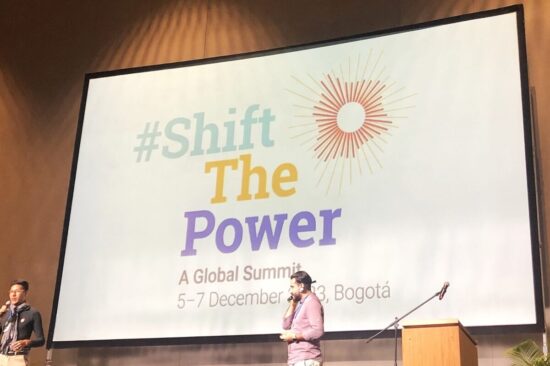

At the end of April, the Centre was invited to speak at the closing panel at the Ottawa Civic Space Summit – Igniting Hope, the inaugural summit organised by Resilient Societies and Cooperation Canada. Bringing together more than 350 participants from civil society, philanthropy, academia, politics, and media from Canada and across the world. The summit focused on how to defend, reclaim, and reimagine civic space at a time of increasing global challenges.
The summit confirmed many of the trends shaping civic space today, including democratic backsliding, growing geopolitical fragmentation, restrictive legislation targeting civil society, increasing digital threats and disinformation, and attacks on activists. The growing influence of anti-rights actors is particularly affecting civil society as they attack rights and democratic values, shape narratives, and deepen polarisation. At the Centre, we are exploring some of these dynamics and possible civil society responses, including in this earlier blog.
1) Civic space is critical infrastructure, not a “nice to have”
One of the clearest messages throughout the summit was that civil society must be understood as critical infrastructure. Civic space enables people to organise, hold power to account, protect rights, shape policies, and respond collectively to challenges.
Democracies weaken when participation becomes passive, fragmented, or transactional. Strengthening civic space, therefore, means actively investing in participation, trust, solidarity, and democratic resilience.
2) Shrinking civic space is a global and interconnected phenomenon
Across regions, similar patterns are emerging: restrictive legislation, the rise of anti-rights actors, criminalisation of activists, digital threats, disinformation, and the use of national security narratives to restrict civil society action. Yet resistance continues, even in highly repressive contexts. Community organising, social movements, and local solidarity structures remain powerful sources of resilience.

Eva Gondor speaking at the Ottawa Civic Space Summit © Tracey Lynne Photography
3) Social movements are reshaping civic action
Recent Gen Z-led movements have shown how decentralised, digitally connected, and often youth-driven movements can mobilise quickly around accountability, justice, and democratic freedoms. This raises important questions for organised civil society about how to support emerging movements and build stronger connections between formal organisations and grassroots mobilisation.
4) Transnational repression requires stronger protection and solidarity mechanisms
Authoritarian pressure increasingly extends beyond borders. Diaspora communities, exiled activists, and journalists are being targeted physically and digitally through surveillance, intimidation, and coordinated attacks. Responses must not only document the attacks themselves but also recognise their emotional impacts. A better understanding of the realities faced by those affected can help build the evidence needed to strengthen protection mechanisms.
5) Independent media remains central to democratic resilience
Media freedom and civic space are closely connected. However, the media landscape is experiencing declining funding for investigative journalism, increasing political pressure on journalists, disinformation, propaganda, and algorithms all contribute to this. In many countries, media ownership is increasingly concentrated among political or economic elites. At the same time, local journalism and trusted community-based information continue to play a critical role in strengthening democratic participation and resilience. Supporting independent media, protecting journalists and whistleblowers, and rebuilding trust in reliable information remain essential.

Closing panel at the Ottawa Civic Space Summit ©Tracey Lynne Photography
Moving forward
Beyond the immediate challenges discussed, several priorities stand out for civil society moving ahead:
1) Stop operating in silos and instead build ecosystems
Civic space cannot be defended by isolated actors working separately. Stronger ecosystems, broader coalitions, and deeper partnerships are needed across civil society, philanthropy, academia, media, and beyond.
Importantly, solidarity must move beyond rhetoric and become something actively practised through shared resources, mutual support, coordinated advocacy, and collective protection mechanisms.
2) Move from diagnosis to collective action
Civil society is often highly effective at analysing challenges, identifying risks, and producing recommendations. The greater challenge is turning those insights into coordinated and sustained action.
This also requires more intentional investment in civic infrastructure, including flexible and core funding, greater willingness to share risks, and stronger support for local knowledge and community leadership.
3) Shift from reaction to anticipation
During the closing session on a 2035 vision for civic space, I presented on how civil society often remains stuck in reacting to immediate crises. While responding to threats and attacks is necessary, organisations also need to create more space to anticipate change, prepare for shocks, and actively shape the futures they want to see.
This means investing more intentionally in foresight and long-term thinking rather than only responding once crises unfold. For example, through the Centre’s work on strategic foresight, we explore how foresight approaches can help civil society organisations navigate uncertainty, stress-test strategies, and strengthen long-term resilience.
At a time when civic space is under increasing pressure around the world, hope is not passive optimism, but something collectively built through solidarity and collective action. It lies not only in defending what exists today, but also in the continued courage to imagine and build what comes next.
To explore these approaches further, visit our Futures work on our website, where we share tools, scenarios, and practical resources designed to help civil society organisations navigate uncertainty and strengthen resilience.
Further reading
-

Civil Society Responses to the Rise of Anti-Rights Movements
Across the world, democratic values and human rights are facing growing pushback....
-
Civil society at crossroads: Shaping tomorrow with unity and vision
It is clear that the current global shifts are creating unprecedented pressure...
-
Beyond Business as Usual in International Civil Society
Breaking free from international civil society organisations' inertia requires bold imagination to...
-

Anticipate, Adapt, Act: Shaping a resilient future for civil society
It is widely understood that the civil society sector faces undue restrictions...