
How anti-rights actors are reshaping the democratic landscape
Anti-rights actors are posing growing challenges to democratic systems and the protection of human rights worldwide. By anti-rights actors, we refer to state and non-state actors who actively work to undermine a wide range of rights, including gender equality, LGBTQI+ rights, migrant protections, and indigenous rights. They often rely on nationalist rhetoric and fear-based narratives that portray progressive causes as threats to social stability or national identity.
Over the past decade, anti-rights actors have become increasingly organised and transnational, forming well-funded networks that span organisations, think tanks, advocacy groups, and political actors. Through coordinated campaigns, they influence public discourse, lobby policymakers, and use digital technologies to amplify disinformation and polarising narratives. Their strategies often travel across contexts, with restrictive laws, messaging tactics, and political approaches replicated from one country to another.
At the same time, broader political shifts such as rising authoritarianism, populism, and shrinking civic space have strengthened the influence of these movements. As funding for civil society organisations becomes more constrained and legal restrictions increase, traditional civil society strategies are increasingly struggling to respond to the scale, coordination, and resources of today’s anti-rights movements.
How civil society is pushing back
As anti-rights actors have gained influence and their impact on civil society has intensified, at the International Civil Society Centre we began examining the issue more closely in 2025 through our Solidarity Action Network (SANE), building on earlier engagement in this field. While valuable work has already been done to analyse who these actors are and how they operate, we wanted to better understand how civil society is responding and what approaches are emerging to push back. To explore this, we conducted a landscape mapping of strategies used by civil society organisations to counter anti-rights actors and strengthen rights-based approaches. Although responses vary across regions and contexts, several common strategies emerged:
Civil society organisations are investing in monitoring, investigations, and knowledge sharing to expose the funding sources, agendas, tactics, and networks behind anti-rights movements. Research by civil society and academic institutions helps strengthen the evidence base and improve understanding of how these actors operate and coordinate across contexts. As one contributor to the mapping noted: “We must keep sharing insights, building on our own work, because while each of us brings a different emphasis, the collective effort must be united in direction.”
Legal advocacy and strategic litigation remain powerful tools. Coordinated legal action has been used to challenge restrictive legislation, defend human rights, and advance progressive legal standards. Strategic litigation not only protects rights in individual cases but can also establish precedents that reinforce broader human rights norms.
Civil society is also expanding its digital responses. This includes researching how anti-rights actors operate online, exposing disinformation campaigns, advocating for stronger accountability from technology companies, and addressing online violence targeting activists.
Additionally, many organisations are strengthening support mechanisms for frontline actors. Grassroots organisations and human rights defenders often face significant risks when confronting anti-rights actors. In response, civil society networks are expanding rapid response support, security tools, and longer-term investments in resilience and wellbeing.
Narrative work is another growing focus. Rather than only reacting to attacks, organisations are developing value-based storytelling that promotes dignity, equality, and solidarity while reframing debates around shared values.
Across all these areas, network and coalition building amplify the impact of civil society efforts. Alliances across regions, sectors, and movements enable organisations to share knowledge, combine strengths, and coordinate advocacy initiatives.
Yet despite growing recognition of the importance of collaboration, our mapping revealed that collective action across civil society remains limited and fragmented, with many responses focused on reacting to developments rather than anticipating them. As one participant in the mapping highlighted, “Civil society responses are scattered, more reactive than proactive.”
Building a stronger collective response
Going forward, civil society needs more coordinated and forward-looking approaches. Our International Civic Forum offered an opportunity in Bangkok in November 2025 to reflect on strengthening collective responses to anti-rights actors and developing more proactive strategies to protect and advance human rights. What emerged from these discussions are three priority areas that we are now taking forward:
Advancing digital governance
Digital platforms have become central battlegrounds for narratives, mobilisation, and influence. Civil society, therefore, needs to deepen its engagement with digital governance and technology actors. This includes increasing digital literacy, strengthening digital security capacities, building closer collaboration with digital rights organisations, and exploring new ways to hold technology companies accountable through advocacy, reputational pressure, and partnerships that promote responsible digital practices.
Building compelling narratives
Effective narrative work must be rooted in local contexts and lived experiences, prioritising listening to communities and identifying values that already resonate. It also requires shifting from short-term communication campaigns towards longer-term processes that build trust and reshape public narratives. As one contributor noted, civil society must focus more clearly on: “what we stand for, rather than what we stand against.”
Strengthening networks, coalitions, and movements
Responding effectively to anti-rights actors requires alliances that extend beyond traditional civil society networks. Participants highlighted the importance of working with partners across sectors, including journalists, legal experts, youth leaders, content creators, and like-minded policymakers. Creating spaces where these actors can meet, exchange learning, and collaborate on joint initiatives is key to strengthening collective action.
What’s next
The rise of anti-rights actors presents a long-term challenge for civil society worldwide. Organisations across regions are experimenting with new approaches, learning from one another, and increasingly recognising the need to build stronger alliances.
The International Civil Society Centre will continue creating spaces where civil society actors can align, exchange experiences, and explore collective responses to these developments. If you are interested in learning more about our work, we invite you to get in touch.
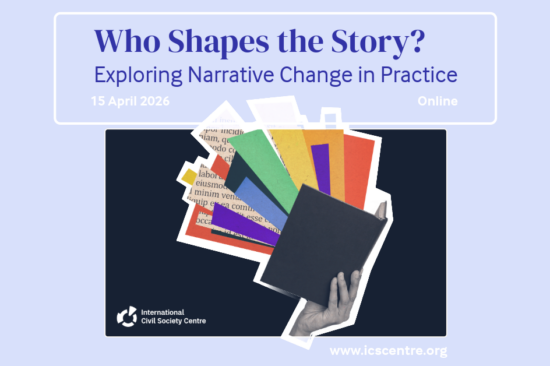
As a next opportunity, we invite you to join us on 15 April for a virtual learning session on shaping narratives. You will hear from colleagues at DAKILA, who will share insights from their narrative change work in response to increasingly populist and authoritarian dynamics, and in support of human rights and democracy. The session will provide an interactive space to reflect on and strengthen your own approaches to narrative work to protect civic space and drive social change. Register below to join the session.
Related events
-
Public
-
Solidarity Action Network